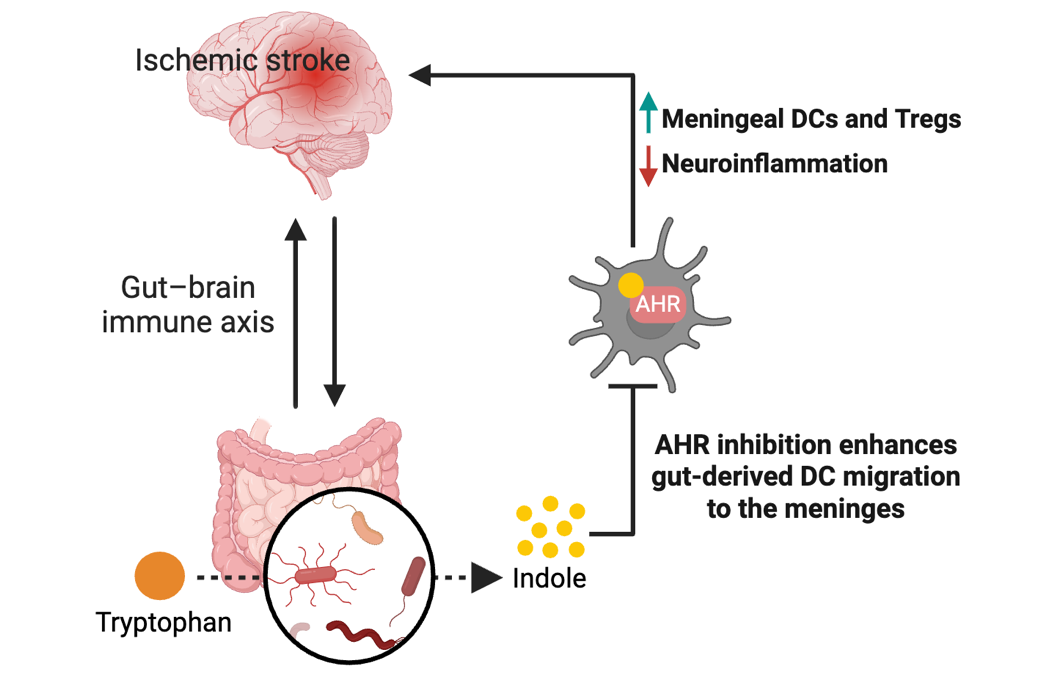
In a cohort of patients with ischemic stroke, the team found that higher abundance of tnaA, the gut bacterial gene required to produce indole from tryptophan, was associated with poorer functional outcome. The ISD researchers then investigated this pathway experimentally and identified microbial indole as a key signal linking the gut microbiota to brain injury. In mice, indole-producing bacteria worsened stroke outcome through the aryl hydrocarbon receptor (AHR) in intestinal dendritic cells. Limiting AHR signaling modified dendritic cell function and promoted their trafficking from the gut to the meninges, where regulatory T cells increased, leading to reduced brain injury. The study identifies a microbiota–immune pathway through which bacterial tryptophan metabolism can condition gut immune responses and influence stroke severity.