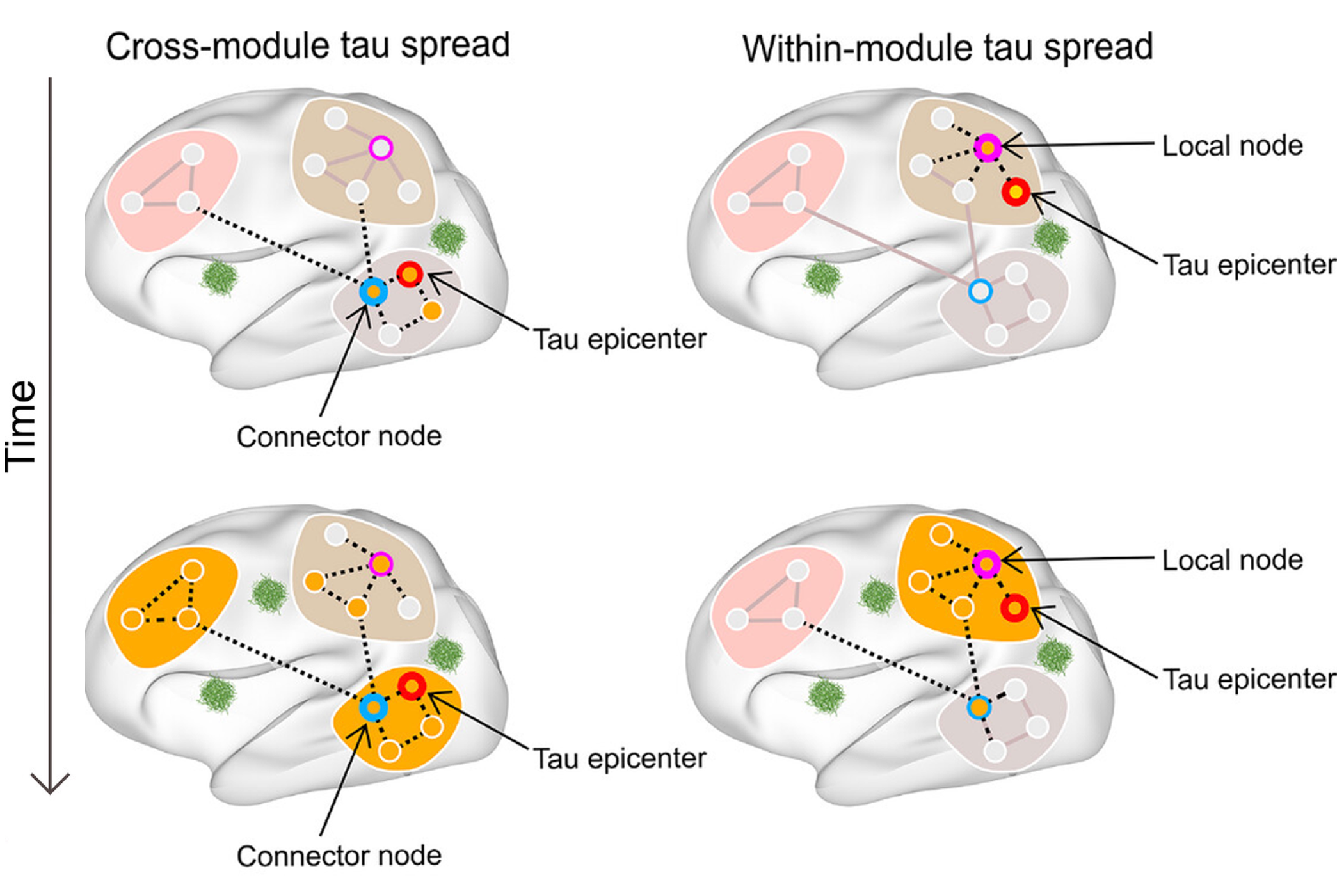
ISD researchers tested whether the brain's modular network architecture — densely interconnected functional systems linked by specialized connector regions — helps explain these differences. They found that regions of early tau accumulation with easier access to cross-network connectors were associated with faster, more widespread tau propagation and steeper cognitive decline, marking brain connectivity as a key driver of disease progression.
Combining amyloid and longitudinal tau PET from two cohorts (490 participants) with brain connectomics, the researchers introduced epicenter broadcast capacity, a measure of how efficiently early tau-affected regions are connected to cross-network connector regions.
Higher broadcast capacity predicted faster amyloid-related tau accumulation, wider spread, and steeper cognitive decline — identifying network architecture as a key factor in individual disease trajectories.
Mapping individual brain network organization could improve progression predictions and help identify patients most likely to benefit from disease-modifying therapies.