
News | 22/05/2026

AI atlas reveals systemic-injury caused by obesity

Ali Erturk and his team have developed an artificial intelligence (AI) framework that maps disease-related changes throughout the entire mouse body at cellular resolution. Using MouseMapper, the researchers uncovered widespread inflammation and previously unrecognized damage to specific sensory nerves caused by obesity and also identified corresponding molecular signatures in human tissue, suggesting that key features of obesity-associated injury are conserved across species
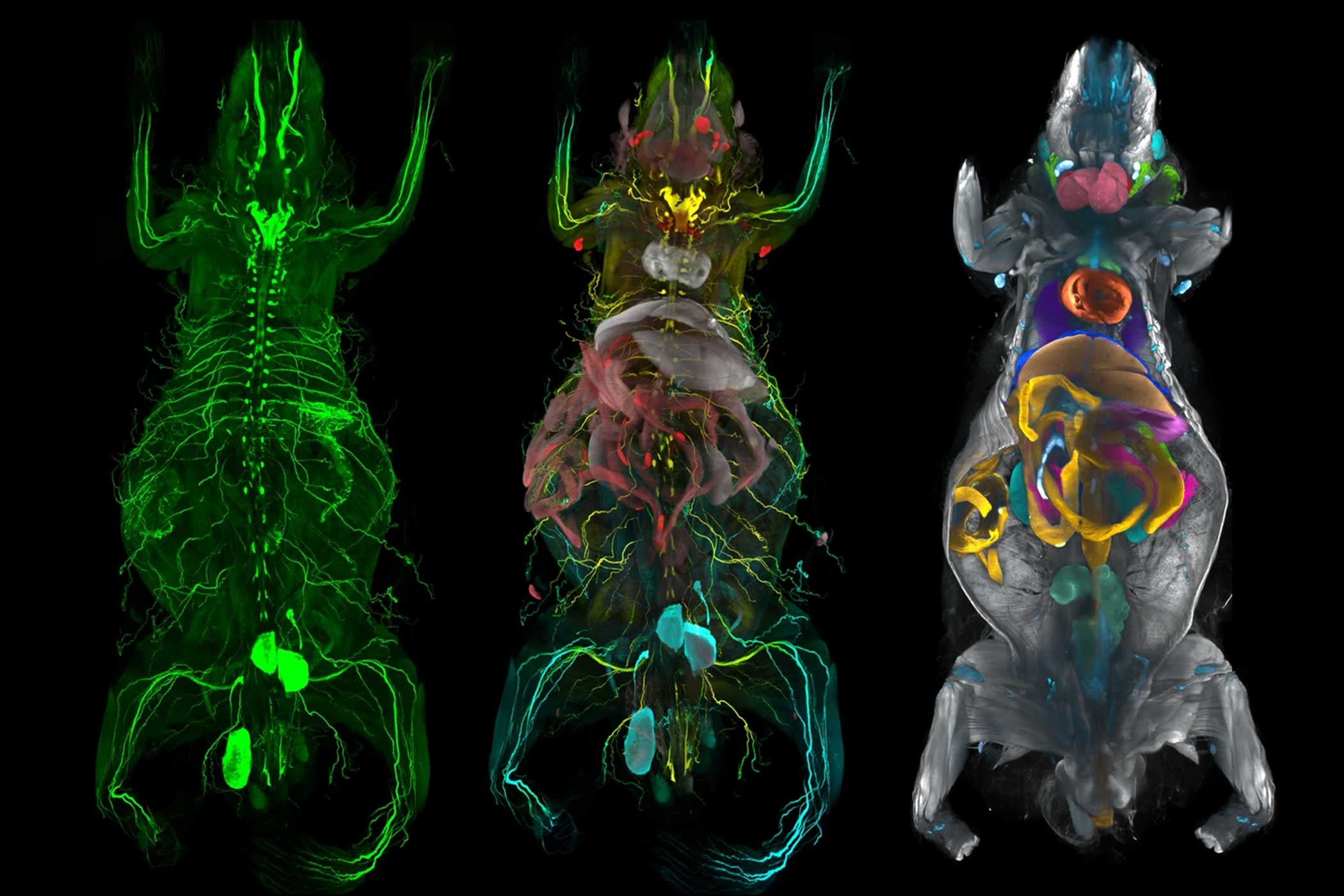
Obesity affects far more than metabolism, altering immune activity, nerve structure, and tissue organization across multiple organs. To study these effects, researchers developed MouseMapper, an AI framework that analyzes whole-body imaging data in intact mice at cellular resolution. Using fluorescent labeling, tissue clearing, and light-sheet microscopy, the team mapped nerves and immune cells throughout the body. In obese mice, they found widespread inflammation and significant damage to the trigeminal nerve, which controls facial sensation. The affected mice also showed reduced sensory responses. Molecular analysis revealed obesity-related changes linked to nerve remodeling and inflammation, many of which were also found in human tissue. The findings suggest obesity-associated nerve damage is conserved across species and demonstrate MouseMapper’s potential for studying complex systemic diseases.