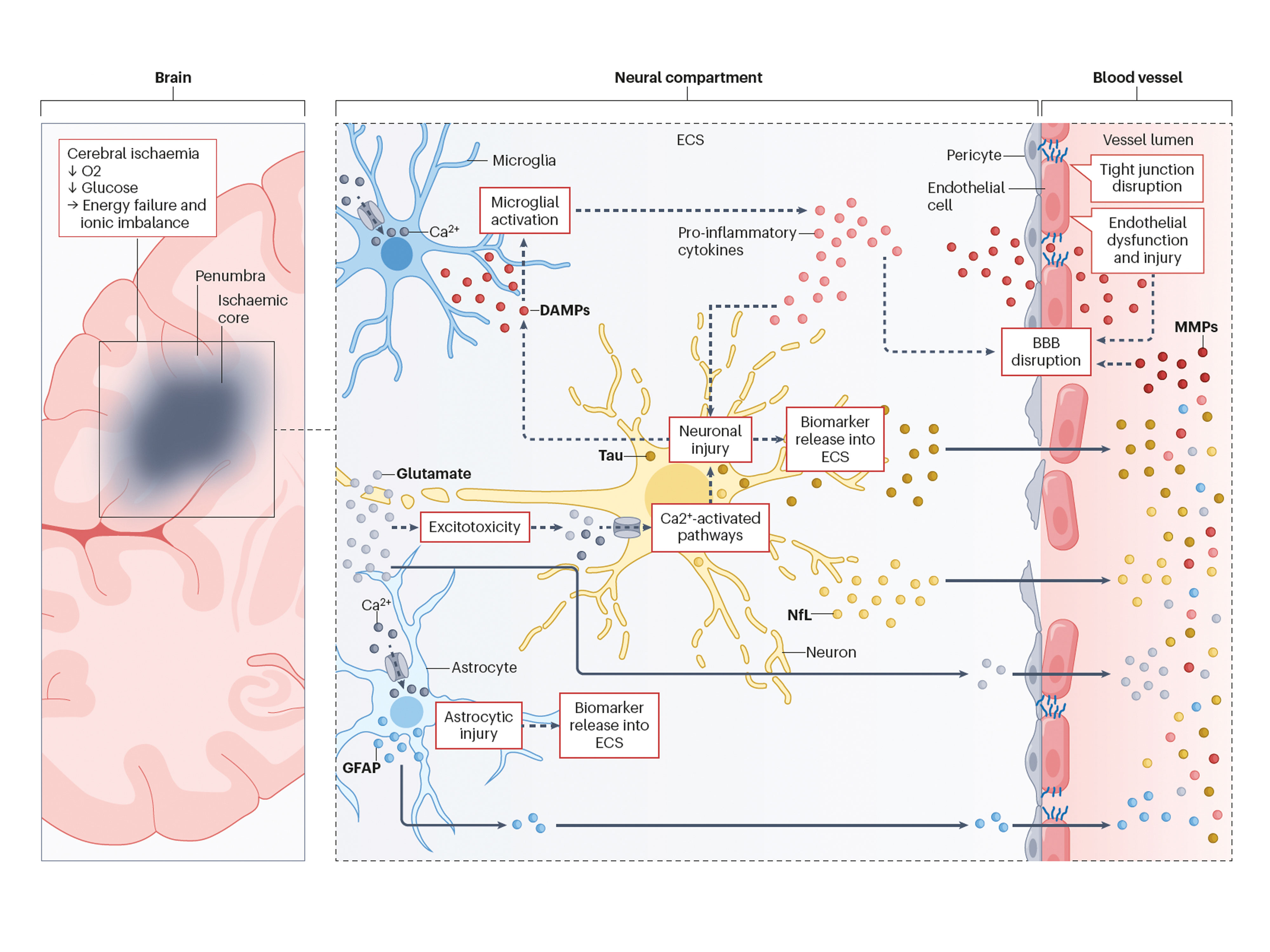
Acute ischaemic stroke remains a leading cause of death and long-term disability. Although reperfusion treatments have transformed stroke care, only a proportion of patients benefit, and clinical decisions still rely mainly on neurological assessment and brain imaging. These approaches provide important information about tissue damage and treatment eligibility, but offer only limited insight into the molecular mechanisms that determine injury progression, treatment response and recovery. Stroke also triggers complex systemic responses involving metabolism, inflammation and the gut–brain axis. A major challenge is therefore to identify biomarkers that can reliably reflect these dynamic biological processes in individual patients. Such markers must not only be biologically meaningful, but also analytically robust, clinically validated and suitable for rapid and repeated measurement in routine care.
The authors synthesised evidence on molecular biomarkers across several interconnected mechanisms of acute ischaemic stroke, including brain injury, metabolism, systemic inflammation and gut dysbiosis. They assessed emerging candidates such as brain-derived tau, neurofilament light chain, metabolic signatures, inflammatory markers and microbiota-derived metabolites. Based on this evidence, they developed a six-phase roadmap covering biomarker discovery, validation, assay development, clinical implementation and biomarker-guided trials.
Key strategies include systematic blood sampling in acute stroke trials; multicentre prospective cohorts with serial sampling and deep clinical and imaging phenotyping; omics studies anchored to clear clinical questions and supported by advanced computational analyses; experimental work to define biomarker origin, regulation and function; and early collaboration between academia, industry and regulators to develop robust, scalable assays for clinical use.
Molecular biomarkers could help shift stroke medicine towards more precise, biology-guided care. By making evolving mechanisms of brain injury and systemic response measurable in individual patients, they could complement current clinical and imaging-based approaches and ultimately support more targeted treatment and trial strategies.